


Unexpected events such as the global spread of COVID-19 show that we are in a challenging and constantly changing work and study environment. In the educational context, both teachers and learners need to be adaptable and creative to meet those challenges. With that in mind, strength and resilience can be gained by understanding our complex world as a place of diverse opinions, cultures, religions and races.
In this way, teachers can and should spotlight learners’ identity and background by introducing them to less heard stories that inspire creativity, motivation and confidence. In this article, we will introduce diversity and the value of personal stories in ELT, addressing creative ways to move from teacher-centered to student-centered learning by sharing students’ own stories.
In light of emerging social movements such as “Me too” and “Black Lives Matter”, being more inclusive and open to the stories from less heard voices has come to the forefront. Diversity has become a buzz word across industries and, similarly, in the ELT context.
But what does it really mean, after all? It is interesting to compare and contrast different definitions to clearly define the term. According to Oxford languages, diversity is “the practice or quality of including or involving people from a range of different social and ethnic backgrounds and of different genders, sexual orientations, etc.”
In the English language teaching (ELT) context, ADHIKARI (2014, online) states that
Diversity implies the state of being diverse in forms. It is the state in which multiformity exists because of co-existence of multiple, yet interconnected forms of the phenomenon. Diversity is a reality in the English language classroom, particularly in contexts like ours, where the classroom houses teachers and learners both from diverse linguistic, cultural, geographical, economic, and social backgrounds. I interpret diversity along the dimensions of language and culture, and cognition and creation of students.
Indeed, when we really look at teaching materials, the images, the voices, the texts, they do not even reflect ourselves as teachers. In turn, we did not see ourselves as part of our learners’ English journey. Major ELT publishers generally aim to include a variety of narratives in their books and resources. Typically, stories from the US and UK, and occasionally from Ireland, South Africa, Australia or New Zealand are used. However, there is a lack of stories that truly represent our learners’ background which includes speakers of English as a second language (Saemee-Nomniam, 2022). Since there are 75 anglophone countries, where English is either an official language or a language of relevance (Crystal, 2012), including places in Africa, the Caribbean, and Asia, there is value in spotlighting world Englishes in the classroom.
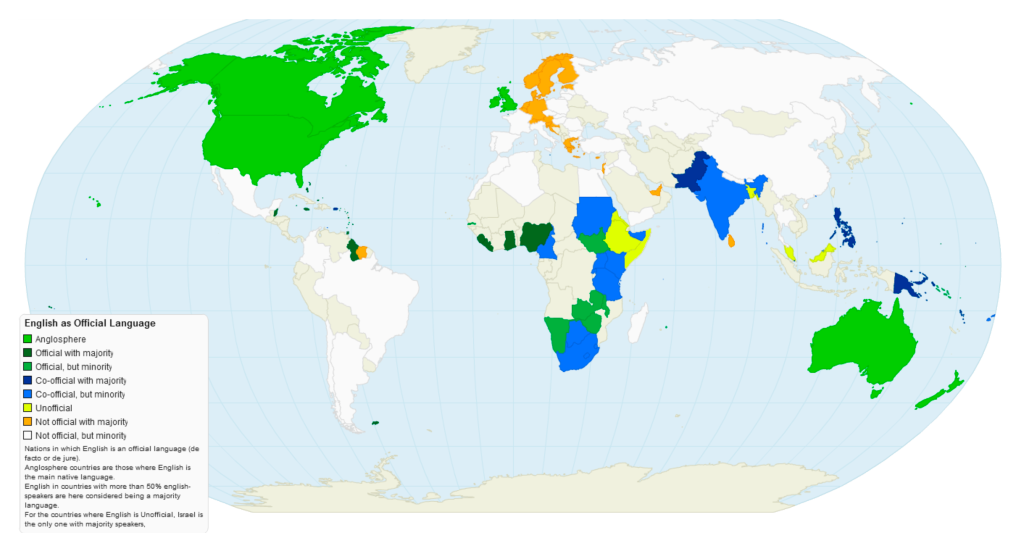
According to Suzuki (2011 p. 145)
To develop learners’ communicative capabilities, some sociolinguists have started to call for the introduction of different varieties of English into ELT (for example Matsuda 2003). They maintain that being exposed to several varieties in the classroom can help learners become aware that the success of communication with other English speakers does not necessarily rely on the forms of English they produce, and their developed awareness would help them focus more on their own communication skills. In order to introduce different varieties into the classroom, teachers would need preparation: they themselves need to have a good understanding of the diverse nature of English. Without teachers’ understanding, it would be difficult to develop students’ capabilities for communication with speakers of different varieties of English.
Due to the position of language in the development of colonialism (Shakib, 2011), British and American English varieties have been imposed and normalised through language institutions and schools’ curricula. So we tend to focus on just a small number of English types, especially American and British English. And even though some teachers acknowledge the existence of a range of Englishes, most don’t really know how to bring those varieties into their classrooms.
Introducing Diversity in the Classroom
In this section, we would like to give some suggestions on how to teach from a culturally diverse perspective.
First of all, we can listen to or read stories from lesser heard English speaking communities. We can also invite our own students to share their opinions and stories. In this way, we de-centre British and American narratives and culture, re-centre and include individuals who speak English as a second language, or as a Lingua Franca, and give them permission to bring part of their native culture into their communication in English.
Through story reading and writing, we can introduce distinct cultural aspects of a variety of Englishes to our learners, allowing them to compare and contrast aspects of their own lives (Varga Dobai, 2020). Reading, listening to and sharing stories foster human connection because they are naturally empathetic. Thus, teachers should provide students with selected stories, facilitate discussions, scaffold writing and encourage students to share their own stories.
The set of activities below is a didactic sequence for reading and producing stories based on one of the coauthor’s (Thorne, 2020) Masters dissertation project. They were designed for adult learners from intermediate to advanced levels. The original course lasted 4 weeks including asynchronous pre and post lesson activities as well as synchronous lessons. However, some activities can be adapted to suit either face-to-face lessons, flipped or blended formats. The following suggestion is based on two main phases: first reading and discussing, then writing and sharing.
Reading & Discussing
Step 1: Select a suitable text for your student or group, according to their interest and language ability. Since this is a 4-lesson project, learners could benefit from texts and topics that meet the course curriculum.
Step 2: Assign the reading task and encourage students to note down their first impressions and consider the structure of the story. A second reading could provide the opportunity for deeper reflection on which parts of the stories resonated the most.
Step 3: Each student is assigned a role in line with one of the key elements of the story, such as setting, characters, dialog, real-life connections, and vocabulary. They will make notes, find examples and quotes to share later in the live discussion.
Step 4: Collaborative work gives the group responsibility and motivates them to participate actively. It also involves facilitating discussion so learners can give their opinions and be exposed to other people’s perspectives.
Step 5: The more students go through this process in different stages, the more they broaden their understanding of the text and its various elements. So in this way, students may write up and share their notes on a classroom board or in an online forum.
Step 6: final step involves a personal reflection of the whole experience, which is considered to be the most important part of this process. Provide prompts to help your learners’ creative juices flow.
Writing & Sharing
Step 1: Free writing will help students warm up and discover new ideas. They can either choose a topic or the teacher can provide prompts.
Step 2: Guided writing then helps them narrow their focus by following the theme of the story or an aspect of the text previously read.
Step 3: Depending on the classroom context, the teacher can instruct learners to write their first draft in class or assign it as homework.
Step 4: In order for the task to be successful, it’s also important that the teacher applies a rubric including criteria relevant to the learning task. For example, organization of ideas, vocabulary, grammar, character development. The performance is graded based on how successfully each criterion is met.
Step 5: The second draft is an opportunity for students to work on the feedback received and make changes and improvements to the text.
Step 6: Peer feedback provides a chance to better understand the criteria by applying it to a classmate’s writing. Thus, there’s motivation on the writer’s side, knowing that someone is helping and also responsibility on the reader’s side using the rubric to give good feedback.
Step 7: When the final draft is ready, students have the opportunity to read aloud and share their stories with confidence. It’s important that learners receive meaningful feedback from the teacher taking into consideration the whole process, from reading to sharing.
As time is limited for most teachers, applying part of the framework would be a good place to start. For example, selecting, reading and discussing a suitable text. Lists of English-language short stories can be found by using a reliable search engine, some of which may be printed for offline use. Text choice should be based on age, ability and time available.
Conclusion
The ultimate aim of this set of activities is to create a safe space to promote diversity through sharing stories. By experiencing this process themselves, teachers will feel more confident leading similar reading and writing activities with their own students. This could mean joining communities that focus on exchanging ideas, inspiring teachers to also share their stories, foster creativity and celebrate diversity together. And, ultimately, this could lead to a wide range of identities literally writing themselves into the ELT story.

Karina Pearl Thorne is an Online English Tutor, Learning Designer and Creative Writing Enthusiast. With more than 10 years of ELT experience under her belt, she is now turning to something close to her heart: the reading, writing and sharing of lesser heard and diverse stories in English.

Talita Nakagawa Rochetti is a language educator with over 15 years of experience teaching English and Portuguese as a second language. She has worked in diverse, multicultural contexts and is dedicated to fostering inclusive learning environments. Her interests center on creativity, diversity, and storytelling as pathways to meaningful learning experiences.


