

Difícil, né? Por isso, quando falamos em an apples-to-oranges comparison, queremos dizer que se trata de uma comparação incongruente. Uma variante é apples-and-oranges. Vejam esses exemplos:
- But applying that argument to hedge funds is a bit of an apples-to-oranges comparison.
- The “bottom line” comparisons you make on price are guilty of the same apples-to-oranges error that everyone else makes.
- It simply means that we could sometimes face an apples-and-oranges problem when we apply traditional evolutionary principles to the evolution of molecular mechanisms.
Poderia ser o nosso “comparar alhos com bugalhos”:
- A mesma coisa, eu acho que nós não podemos mais misturar alhos com bugalhos.
- … misturava tudo, confundia alhos com bugalhos.
Apple é bastante usado em sentido figurado:
- There was an offering from an apple-cheeked gentleman with a broom-size beard.
- Beneath them, a bespectacled, apple-cheeked boy was grinning almost maniacally.
- She was an apple-cheeked, cheery woman dressed in expensive, tasteful clothing.
Em português, essas seriam “faces rosadas”.
Outra expressão bem comum com apple é the apple of one’s eye. Por exemplo:
- Kiara was the apple of her eye, according to her friends.
- I was a skinny, fearful kid and I believed I was the apple of his eye. I guess I still believe it.
- You’re the apple of my eye.
Em português, não ocorre a fruta, pois a expressão correspondente é “menina dos olhos”:
- Todo mundo comenta ser Beto a menina dos olhos do pai.
- Ele continuava impaciente pelo reencontro com a filha, a menina dos seus olhos.
Há inúmeras outras expressões com apple, mas vamos ver o que orange tem a oferecer.
Vocês conhecem este tipo de laranja?
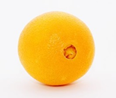
Pois em inglês é chamada de navel Orange, ou seja “laranja de umbigo”, também conhecida como “laranja baía”.
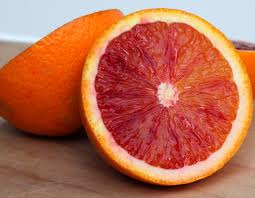
E este? É a “laranja sanguínea”.
E aquele suco de laranja (ou de outra fruta cítrica) natural que é tão bom, como se diz em inglês?
- In season, reward yourself with freshly squeezed orange juice.
- 1 tablespoon freshly squeezed lemon juice
Ou, menos comumente,
- Stir in 1 cup fresh-squeezed orange juice and cook until reduced by half.
Além das colocações Agent Orange (“Agente Laranja”), Code Orange (“Alerta Código Laranja”) e o título do romance de Anthony Burgess, depois filmado por Stanley Kubrick, Clockwork Orange (
“Laranja Mecânica”), orange é especialmente usado como cor, e em vários tons.
“Laranja Mecânica”), orange é especialmente usado como cor, e em vários tons.
Para evitar os comuns light orange e dark orange, aqui vão alguns tons com nomes específicos. Primeiro os tons mais fortes: blaze orange, por exemplo, é o tom usado para chamar a atenção, para efeitos de segurança:
- Make sure everyone knows the safe shooting lanes and is wearing blaze orange.”
- They also increased the amount of blaze orange by 60 percent for added safety.
- She pointed to a half-dozen blaze orange vests hanging beside the door.
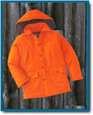 blaze orange vest
A questão da segurança está bem explicada aqui:
Safety orange (also known as blaze orange, vivid orange, hunter orange, Caltrans orange, or Omaha orange) is a hue. The color is commonly used for high-visibility clothing.( https://en.wikipedia.org/wiki/Safety_orange)
- When you hunt with a firearm, wear hunter orange clothing whether the law requires it or not.
- Wear hunter orange, and make frequent voice contact with fellow hunters to avoid accidents.
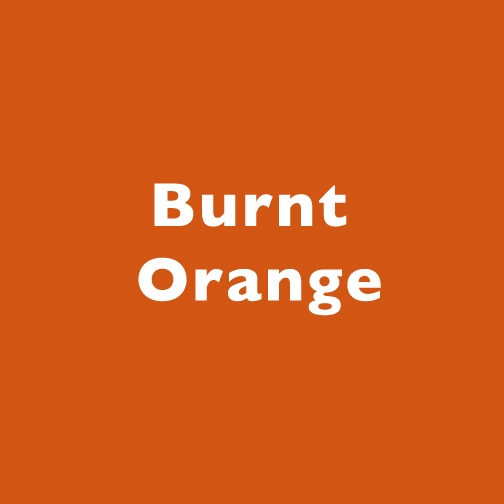
Outro tom de laranja é burnt orange

E mais dois tons: deep orange e fiery orange:
- Beta carotene is found in a lot of the deep orange fruits and vegetables: carrots, mangoes, pumpkins.
- She had on a sari of a deep orange color, bracelets on her arms and around one ankle,
- By the time they arrived in town, the sun was a deep orange disappearing beyond the horizon.

- For one thing, this sun was yellow shot with fiery orange, not bloodred.
- As they dance, the seahorses turn bright colors. Some turn deep red or fiery orange.
- The largest surviving cat was called Thunder. He was a fiery o
range tom with amber eyes and large white paws.


Mais alguns para vocês procurarem exemplos no COCA (www.americancorpus.org) e descobrir se são claros ou escuros: vibrant orange, warm orange, flaming orange, rusty orange, faint orange, soft orange. dull orange. faded orange.
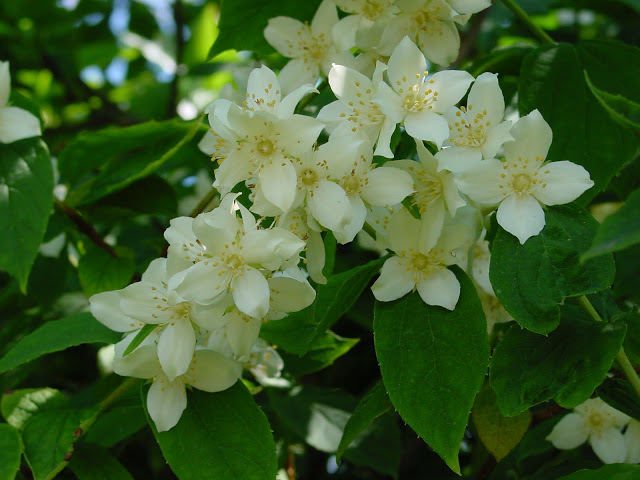
E vamos terminar com mock orange, que não é laranja – nem a cor, nem a fruta. É uma flor (Philadelphus coronarius) que “parece” a flor da laranjeira, daí seu nome, que significa “falsa laranja”. Em português é conhecida como jasmim-da-filadélfia ou falso jasmim.
- If you have room, put a lemon or orange tree or a mock orange (Philadelphus) beside the path.
Até a próxima
Stella

Stella E. O. Tagnin: Professora Associada do Departamento de Letras Modernas, FFLCH, da USP. Embora aposentada, continua orientando em nível de pós-graduação nas áreas de Tradução, Terminologia, Ensino e Aprendizagem, sempre com base na Lingüística de Corpus. É coordenadora do Projeto CoMET.e-mail: seotagni@usp.br


Maravilho! Se aparecesse uma tradução dessas para mim eu iria penar bastante.